How to Find the Best Dentist in San Diego: 7 Questions to Ask Before You Book (Beyond Star Ratings)
Most well-run San Diego practices have strong star ratings, so the rating alone won't separate them. The seven questions below test what reviews can't show: who treats you over time, how thorough the first exam is, whether treatment advice is ranked and transparent, and what happens after the appointment.
The best dentist in San Diego for you gives clear, specific answers before you book: who will treat you at each visit, what the first exam covers, which problems are urgent and which can wait, and how follow-up care works. Star ratings can build your shortlist, but those answers make the choice.
Quick Answer: Use reviews to narrow the field to two or three offices, then call each one with the questions in this guide. Book with the practice whose answers are specific, unhurried, and honest about what can wait.
Key Takeaways
- Star ratings show how a visit felt, not whether the diagnosis or treatment plan was sound.
- A comprehensive first exam goes well beyond a cleaning: X-rays as needed, gum measurements, a cancer screening, and a bite check.
- Ask for your treatment plan in writing, ranked by urgency, with the option to monitor early problems.
- A dentist who explains their reasoning and admits when they refer out is usually worth booking.
Five Stars, Dozens of Offices, One Decision
Search for a dentist in San Diego and most offices on the first page will show ratings close to five stars, which tells you patients were broadly happy. It doesn't tell you how a practice examines, diagnoses, or plans treatment, and those factors decide your results ten years from now.
I hear this from new patients at our office on Oberlin Drive almost every week: "Everyone had great reviews, so I picked the closest one." Sometimes that works out fine.
Other times, it's how someone ends up with a long treatment plan they don't understand and aren't sure they need. This guide is the conversation I wish more people had before booking their first new-patient exam and cleaning.
Why Aren't Star Ratings Enough to Find the Best Dentist in San Diego?
Star ratings measure how patients felt about a visit, not whether the diagnosis was right or the treatment was necessary. Most patients can't judge clinical quality from the chair, so reviews mostly reflect friendliness, wait times, and billing, which matter but don't tell you how carefully a dentist examines and plans care.
Reviews still carry weight. BrightLocal's 2026 Local Consumer Review Survey found that 97% of consumers read reviews for local businesses, and the share who always read them rose from 29% to 41% in one year.
Authenticity is less of a guessing game than it used to be. Since October 2024, the Federal Trade Commission's rule on consumer reviews has banned fake and purchased reviews, including AI-generated ones, and lets the agency seek civil penalties against businesses that knowingly use them.
Even honest reviews have limits.
Volume and recency say more than a perfect average, and here is what a rating can and can't show you:
| What reviews show well | What reviews can't show |
|---|---|
| Front-desk friendliness and scheduling | Whether your diagnosis was accurate |
| Wait times and office comfort | Whether recommended treatment was necessary |
| Billing surprises | How thorough the exam was |
| How the office responds to complaints | Whether the work holds up over five or ten years |
The right-hand column is where the questions below come in. If you haven't checked the basics yet, such as license status, insurance, and location, start with our 7-point checklist for choosing a dentist in San Diego, then come back here.
What Should You Ask a Dentist Before You Book?
Ask questions that reveal how the practice works when no one is writing a review: who treats you, how deep the first exam goes, how they explain findings, how they prioritize treatment, how they keep learning, when they refer out, and what happens after treatment. You can ask most of these on a five-minute phone call.
1. "Will I see the same dentist at every visit?"
Continuity matters more than people expect. A dentist who has followed your mouth for three years notices small changes, like a crack line getting longer or a gum pocket getting deeper, that a new face might miss or overtreat.
Practice structures vary. According to the ADA Health Policy Institute's September 2025 workforce report, more than 1 in 4 dentists within ten years of graduating were affiliated with a dental support organization in 2024, and group settings sometimes rotate providers.
Neither model is automatically better. You want a clear answer about who is responsible for your care over time.
2. "What does your new-patient exam include?"
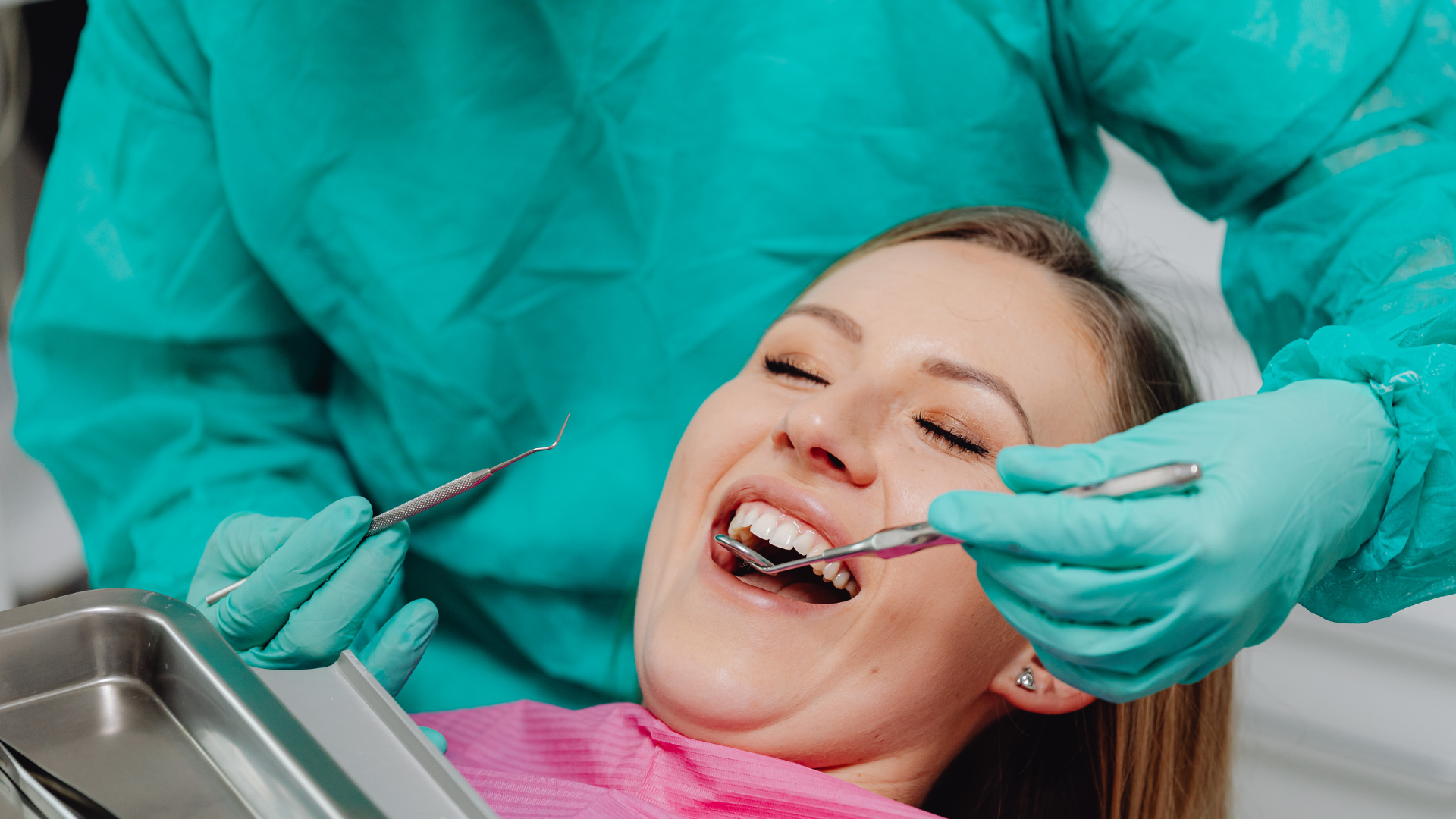
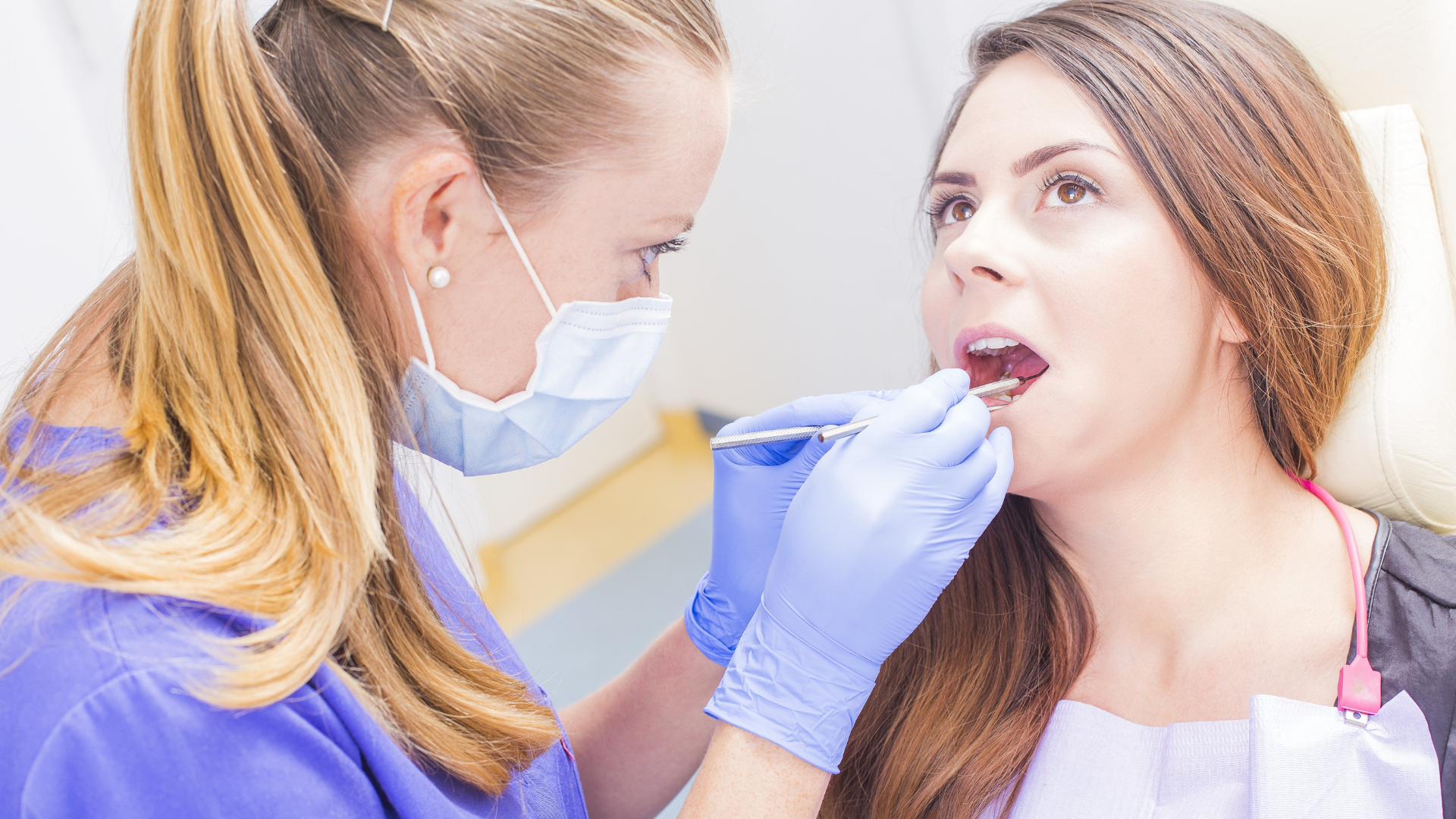
A cleaning plus a quick look is not a comprehensive exam. Ask whether the first visit includes X-rays as needed, gum measurements around every tooth, an oral cancer screening, and a check of your bite and jaw joints.
My own first visits start with a full risk assessment, the approach I trained in at the Kois Center: gums, tooth structure, bite, and how your smile fits your face. It takes longer than a standard checkup, but it gives us both a baseline to measure every future visit against.
3. "Can you show me what you're seeing?"
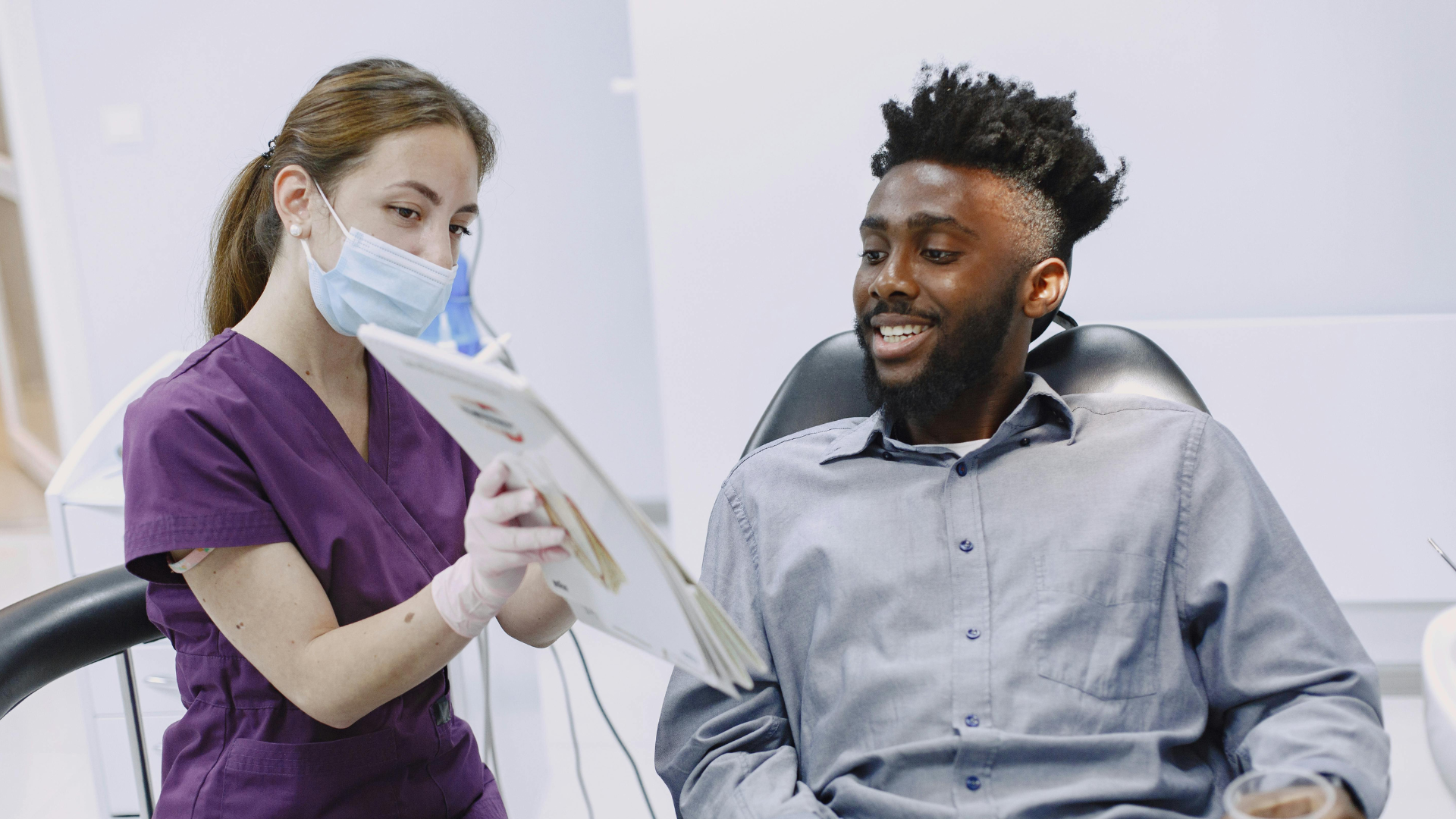
You should never have to take a diagnosis on faith. A good dentist will put your X-rays and photos on a screen and point to the problem, whether it's a cavity, a fracture, or bone loss around a tooth.
If an office is reluctant to show you images or send copies, treat that as a warning sign. Your records belong to you, and a clear explanation is part of the care.
4. "Which of this is urgent, and what can we watch?"
This question tells you more than any other. Not every spot on an X-ray needs a drill, and the American Dental Association's evidence-based guideline on nonrestorative treatments supports options such as fluoride varnish, sealants, and silver diamine fluoride to stop or reverse some early cavities without a filling.
Ask for your treatment plan in writing, sorted by priority. An honest plan separates "needs attention now" from "let's monitor this", explains what happens if you wait, and leaves room to phase care around your budget.
5. "How do you keep your training current?"
The Dental Board of California requires every actively licensed dentist to complete 50 units of continuing education per two-year renewal cycle, so that number is the floor. Ask what the dentist has studied beyond the minimum and how it changed the way they treat patients.
Good answers name something: a program, a technique, a piece of technology added for a reason. "We stay up to date" doesn't tell you much.
6. "When do you refer out, and to whom?"
No general dentist does everything, and the good ones say so. Ask which procedures the practice handles in-house and which go to a specialist, such as complex root canals, gum surgery, or difficult wisdom-tooth extractions.
A ready list of trusted specialists is a sign of confidence. A dentist who never refers anything may be working past their training.
7. "What happens if something goes wrong after treatment?"
Crowns can loosen, fillings can feel high, and tooth pain doesn't keep office hours. Ask whether there's an after-hours contact, and whether the office will adjust or redo work that fails early, and at what cost.
How an office answers this before you're a patient is a fair preview of how it will treat you once you are one.
How Do You Know If the Answers Are Good?
Good answers are specific, unhurried, and willing to admit limits, while weak ones are vague, rushed, or end with a push to book. What you're checking is whether the practice explains its reasoning, because that habit shows up in every exam and treatment plan that follows.
Here is a quick way to sort what you hear:
| Question | Reassuring answer | Worth a second look |
|---|---|---|
| Same dentist? | Names who will treat you and why | "Whoever is available" |
| New-patient exam | Walks through each step | "A cleaning and a quick look" |
| Show me | Offers to show and send your images | Hesitates to share records |
| Urgent vs. watch | Ranks treatment by priority | Everything needs doing now |
| Training | Names specific programs | "We stay up to date" |
| Referrals | Has go-to specialists | Never refers anything out |
| After treatment | Clear plan for problems and after-hours calls | No real answer |
Frequently Asked Questions
How do I find the best dentist in San Diego?
Start with reviews to build a shortlist of two or three nearby practices, then call each one and ask who will treat you, what the first exam includes, and how they prioritize treatment. The best dentist in San Diego for you is the one whose answers are clear, specific, and free of pressure.
Are Google reviews reliable for choosing a dentist?
They're useful for spotting patterns in scheduling, comfort, and billing, and the FTC's 2024 rule now bans fake and paid reviews. Reviews can't tell you whether a diagnosis was accurate or treatment was necessary, so pair them with direct questions to the practice before you book.
What should a new patient dental exam include?
A comprehensive new-patient exam usually includes X-rays as needed, gum measurements around each tooth, an oral cancer screening, a check of your bite and jaw joints, and a review of your medical history. A cleaning alone, without these steps, isn't a full baseline exam.
Is it okay to get a second opinion from another dentist?
Yes. A second opinion is reasonable for any large or expensive treatment plan, such as several crowns, implants, or a smile makeover, so ask your current dentist for copies of your X-rays and compare how each dentist prioritizes the work.
Do all cavities need fillings?
Not always. The American Dental Association's guideline on nonrestorative treatments supports options like fluoride varnish, sealants, and silver diamine fluoride to stop or reverse some early cavities, and whether that works depends on the cavity's size and location.
How many continuing education hours do California dentists need?
Actively licensed dentists in California must complete 50 units of continuing education every two-year renewal cycle, including required courses on infection control and the California Dental Practice Act. Many dentists go beyond that minimum, so it's fair to ask what training a dentist has added.
The Dentist Behind This Guide
Dr. Faith-Roselle Barreyro, DMD, known to patients as Dr. Faith, is a general and cosmetic dentist at Diamond Dental Studio in San Diego. A San Diego native, she earned her Bachelor of Science in Chemistry from the University of California, San Diego, and her Doctor of Dental Medicine from A.T. Still University's Arizona School of Dentistry and Oral Health.
She graduated from the Kois Center, where she trained in comprehensive, evidence-based, and aesthetic dentistry. She is an active member of the American Dental Association, California Dental Association, San Diego County Dental Society, Academy of General Dentistry, American Academy of Clear Aligners, and American Academy of Facial Esthetics.
Serving patients across UTC, Sorrento Valley, and the 92121 area from 5425 Oberlin Drive, Suite 101, San Diego.
Your Next Step: One Phone Call
Reviews can tell you an office is pleasant, but only direct questions show you how it diagnoses, plans, and follows through. Ask about continuity, the first exam, images, priorities, training, referrals, and aftercare, then book where the answers make sense to you.
We're happy to be tested. Call Diamond Dental Studio at (858) 546-0500 and ask all seven, or book your new-patient visit online.
Disclaimer: The content provided in this blog is for informational purposes only and does not constitute professional medical or dental advice, diagnosis, or treatment. Always seek the advice of your dentist or other qualified health provider with any questions you may have regarding a dental condition. Reliance on any information provided in this post is solely at your own risk.